Tips & Guides
Lawn Care in Sydney, a Season by Season Guide
What does good lawn care in Sydney actually look like?
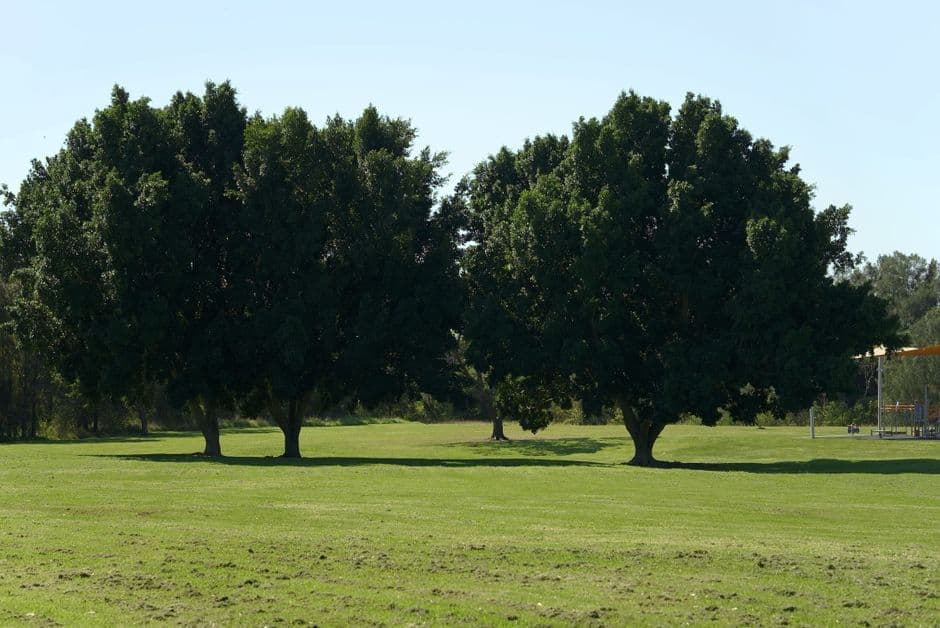
Lawn care Sydney conditions reward is mostly timing. Almost every Sydney lawn is a warm season grass, buffalo, couch or kikuyu, which means it roars through summer, sulks through winter, and responds to the right job done in the right month far more than it responds to effort. Feed it in spring and autumn, mow it high through summer, water it deeply and rarely, and leave it largely alone in July. That is the whole guide, and the rest is detail.
The detail is worth having though, because most lawn problems we get called to in the Hills are timing problems wearing a disguise.
Spring, the month everything happens
Spring is when a Sydney lawn wakes up, and it is the single highest value window in the year.
From about September the soil warms and warm season grasses start moving again. That is the moment to feed. A spring fertiliser goes down when the grass can actually use it, which is why the same product applied in June is largely wasted, the plant is dormant and cannot take it up.
Spring is also the right time for the jobs that hurt a lawn briefly to help it for months. Aeration, if the soil has gone hard and water is running off rather than in, wants to happen between September and November while the grass is growing fast enough to recover. Same for top dressing, and the same for laying new turf. There is a fuller spring checklist in getting your lawn ready for spring.
Bindii is a spring problem you actually solve in winter, which is unfair but true. If you are standing on prickles in October you have missed the window, and getting rid of bindii explains the timing.
Summer, mow high and water properly
Through a Sydney summer the two settings that matter most are cut height and watering depth, and most people have both wrong.
Raise the mower. Longer leaf shades the soil, which keeps the ground cooler and holds moisture, and it crowds out weed seedlings before they get established. Scalping a lawn short in January to buy an extra week between mows is the most common self inflicted lawn injury there is. Buffalo in particular wants to be left a touch longer than couch or kikuyu.
Water deeply and infrequently rather than a little every evening. Shallow daily watering trains roots to sit near the surface, where they cook in the first 38 degree week. A long soak once or twice a week drives roots down. Check current restrictions with Sydney Water before you set a timer.
Everyone has that one neighbour watering the lawn at 2pm in a 38 degree January. We will not name names, but most of that water is going into the air rather than the ground.
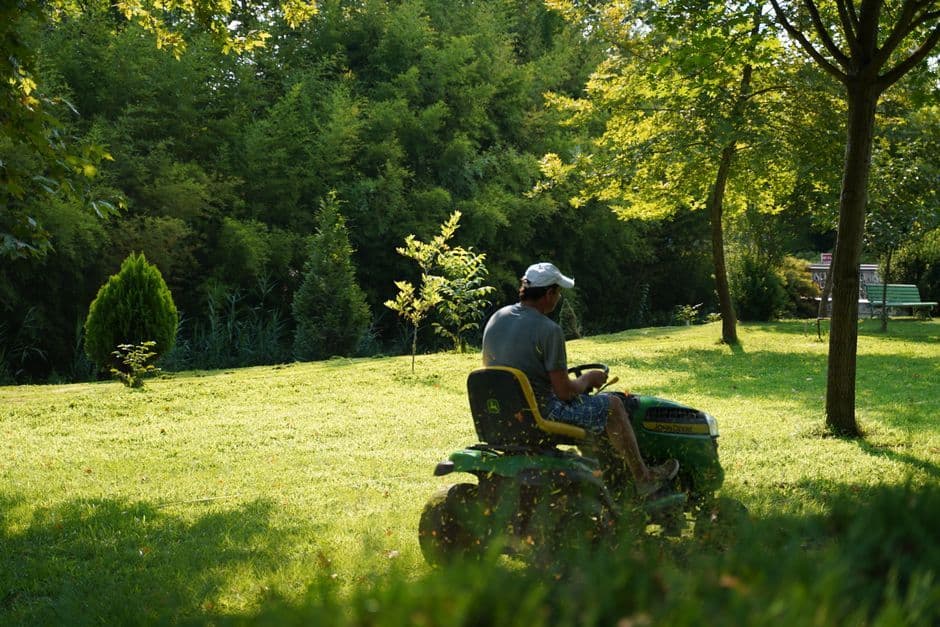
Summer is also mowing season proper. Kikuyu in a hot February does not so much grow as commute, and a fortnight is usually the longest you can leave it. Grass type sets the ideal height, and buffalo, couch and kikuyu each want something different.
Autumn, the feed people forget
Autumn feeding matters as much as spring feeding and gets skipped far more often.
Around April, while the soil is still warm and the grass is still growing, a feed builds the root reserves the lawn will live off through winter. A lawn that goes into June well fed comes out of August green weeks earlier than one that did not, and it holds its ground against winter weeds instead of surrendering to them.
 Aerial view of a golf course by the sea with cityscape in the background.
Autumn is also the sensible time to deal with broadleaf weeds while they are small, and to lift the mowing height slightly as growth slows.
Winter, do less
The best winter lawn care in Sydney is restraint. Warm season grasses go dormant or semi dormant, growth slows to almost nothing, and most of what people do in winter is either wasted or harmful.
Do not fertilise heavily. Nitrogen on a dormant lawn is money on the driveway. Do not water much, if at all, unless it has been genuinely dry. Do not mow on a schedule, mow when there is something to cut, which around Sydney is roughly monthly at most.
Do stay off it when it is soaked. Sydney clay compacts badly under foot and wheel traffic while it is wet, and the ruts and hard patches you create in July are what you will be aerating in September. This is also why we reschedule a visit rather than mow a soggy lawn, which is why we would rather move a visit by a day than tear up a lawn.
What about Sydney clay?
Clay is the background condition for most Hills and western Sydney lawns, and it explains a lot of otherwise confusing behaviour.
Clay holds water, so it stays soggy longer after rain and compacts easily. Then it dries and sets hard, and water runs off instead of soaking in. That cycle is behind most complaints about a lawn that is somehow both waterlogged and dry. The answers are aeration in spring, organic matter through top dressing, a wetting agent if water is beading and running off, and staying off it when it is wet.
How often should a Sydney lawn be mowed?
Every two to three weeks through summer and roughly every four weeks through winter, adjusted to what the grass is actually doing rather than to a fixed date.
Mowing to the lawn instead of to the calendar is better for the grass and better value, because you are not paying for visits the lawn did not need. The reasoning in full is in how often to mow your lawn.
When is it worth getting someone in?
When the timing jobs keep slipping, which for most households is around the second season in a row that spring got away from them.
Regular mowing is the obvious one, but the value is really in the things that only work if they happen in the right month. We cover the Hills District and out to Parramatta and Blacktown, we work on a roster with a reminder before each visit, and there is no lock in. Have a look at garden maintenance across the Hills District or the suburbs we cover, and get in touch for a free quote.
For grass type specific feeding and mowing heights, Lawn Solutions Australia is a solid plain English reference.
Get an honest quote for your place
A free quote, no obligation, and the price we give is the price you pay.