Tips & Guides
How Often Should You Clean Your Gutters?
The short answer
How often should you clean gutters on a typical home? For most homes, about twice a year: once after autumn leaf-fall and once before summer. That covers the two times of year your gutters cop the most, and it keeps them clear through the wet and the heat. If your place sits under a lot of trees, you'll want to do it more often than that, sometimes three or four times a year.
I'm Don, and I clean gutters around the Hills District alongside the lawns. I get asked about timing all the time, usually right after a storm has shown someone exactly where the blockage is. So here's how I'd think it through for your place.
What changes how often you should clean gutters
Twice a year is the starting point, not a rule. A few things push it up or down.
The big one is trees. Gum trees and oaks are the worst for gutters: gums drop leaves and bark all year round, not just in autumn, and oak leaves are broad and heavy and pack down into a mat that holds water. If you've got either hanging over the roof, plan on cleaning your gutters three or four times a year rather than two. A place with no trees nearby might genuinely be fine on a single clean a year.
The other big factor is Sydney's seasons. Autumn fills the gutters with leaf-fall, then summer brings the heavy storms. If your gutters are packed when one of those downpours rolls through, the water has nowhere to go but over the edge. The Bureau of Meteorology tracks how wet and stormy a Sydney summer can get, and the homes that handle it best are the ones cleared before the season, not after the first overflow.
 Gutter being cleared of leaves and debris by hand
Roof shape matters too. A complex roofline with lots of valleys and turns collects more than a simple one. And once gutters have been left a while, they fill faster, because old sludge holds moisture and catches the next lot of leaves more easily.
What happens if you skip it
This is the part worth being honest about, because blocked gutters cause a lot more than an annoying overflow.
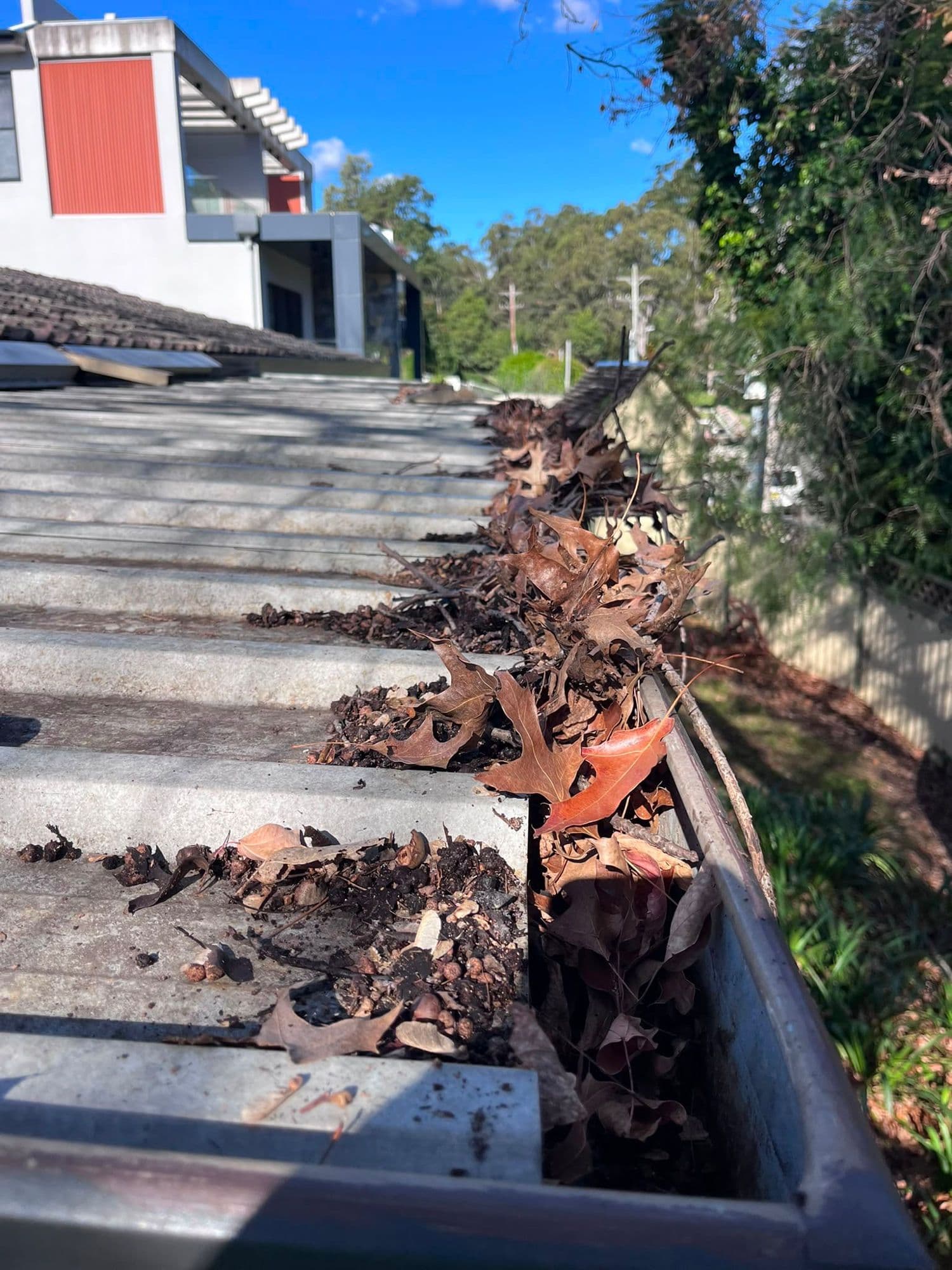
When gutters fill up, water backs up and spills over the edge. That water runs straight into your eaves, fascia and ceilings, and over time it rots timber, stains walls and brings on leaks inside the house. Standing water and damp debris also bring on rust in the gutters themselves, which shortens their life and eventually means replacing them. On top of that, a gutter full of wet leaves is a perfect home for pests: mosquitoes, cockroaches and the odd rodent all move into the damp.
There's one more risk that matters a lot around the Hills. In bushfire-prone areas, gutters packed with dry leaves are an ember trap. During a fire, wind-blown embers land in that leaf litter and can set the roofline alight well before any flames reach the house. The NSW Rural Fire Service lists clearing leaves from gutters as one of the simple, high-value jobs every household should do before the fire season. If you're anywhere near bush, that alone is a reason to keep them clear.
How to tell it's overdue
You don't always need to get up a ladder to know. The clearest signs your gutters need doing:
 Clean, cleared gutter after a DMCS gutter clean
- Water spilling over the front or sides during rain instead of running to the downpipe
- Plants or weeds actually growing out of the gutter (that means soil has built up in there)
- Sagging sections, or gutters pulling away from the fascia under the weight
- Stains or streaks running down the wall below the gutter line
- Birds or pests taking an interest in the roofline
If you've spotted any of those, it's already overdue. And if you genuinely can't remember the last time it was done, it's almost certainly time.
Doing it yourself, or getting me to do it
Plenty of people clean their own gutters, and there's nothing wrong with that on a low, single-storey home with easy access. The catch is the ladder. Most gutter accidents come down to a ladder slipping or someone overreaching, and a fall from roof height is serious. If your home is double-storey, on a slope, or you're not steady on a ladder, it's not worth the risk for a Saturday job.
When I do it, I clear the gutters by hand and with a blower, bag the debris and take it away, check the downpipes are actually flowing, and look over the runs for rust or damage while I'm up there. I work off the ladder safely, set up properly, and leave the place tidy. You get clear gutters and a quick heads-up on anything that needs watching, without anyone in the family going up a ladder.
If you'd like to sort it out, I clean gutters in Baulkham Hills, Bella Vista and across the Hills District. Have a look at our full service areas, or head back to the home page to see what else we do.
Quick answers
How often should you clean your gutters?
About twice a year for most homes, once after autumn and once before summer, and more often if you're under heavy tree cover.
Does tree cover change how often I should clean gutters?
Yes, a lot. Homes under gum trees or oaks should plan on three or four cleans a year, because those trees drop leaves and bark well beyond autumn.
What happens if I never clean my gutters?
They overflow, and that water damages your eaves, fascia and ceilings, brings on rust, attracts pests, and in bushfire areas turns the roofline into an ember trap.
When is the best time of year to clean gutters in Sydney?
The two best windows are right after autumn leaf-fall and just before summer storm season, so your gutters are clear before the heaviest rain arrives.
Should I clean my own gutters or hire someone?
Do it yourself only on a low, easy-access home where you're steady on a ladder, and get someone in for double-storey, sloped or hard-to-reach rooflines where a fall is the real risk.
Not sure where your place sits? Send me your address and a photo of the roofline, and I'll give you a free, no-obligation quote and an honest take on how often it needs doing.
Get an honest quote for your place
A free quote, no obligation, and the price we give is the price you pay.